
There is a story behind every business
We visited some of Lucena City’s small businesses and discovered that every small business has a unique story—of hard work, challenges, and resilience.
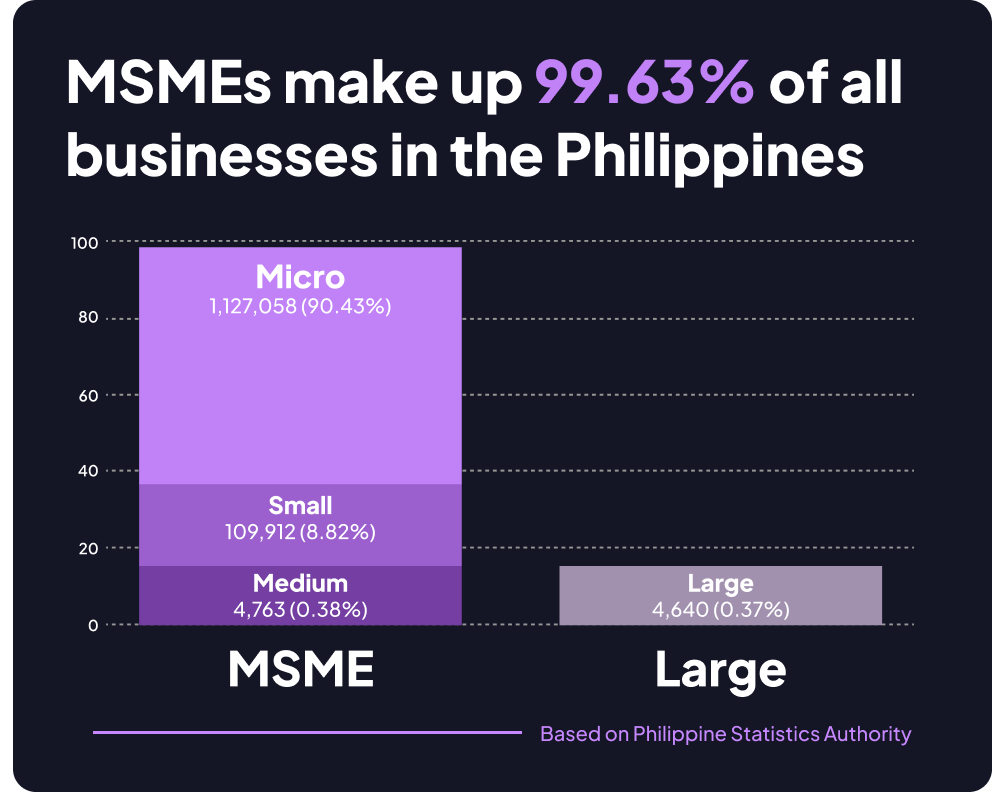
Micro, Small, and Medium Enterprises (MSMEs) are the lifeblood of the Philippine economy. According to the Philippine Statistics Authority, they make up 1,241,733 of the country’s 1,246,373 registered businesses—an impressive 99.63%. Beyond their sheer number, MSMEs also drive employment, providing jobs for over 66% of the workforce.
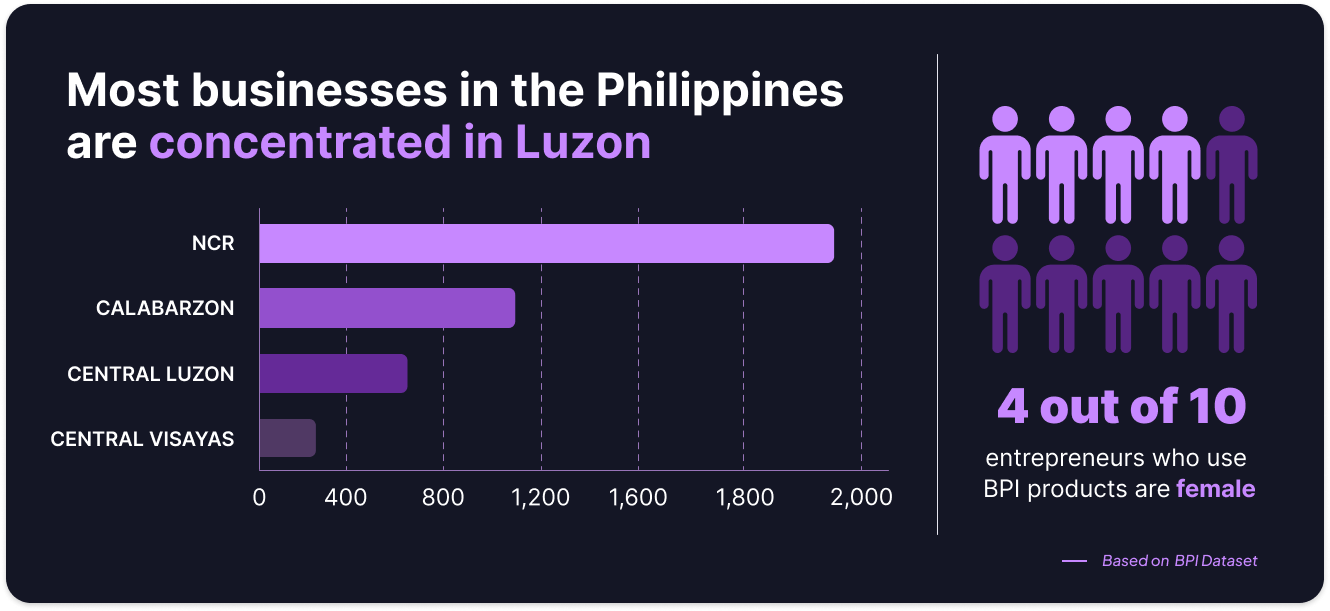
Most businesses are in Luzon, specifically in NCR (35.4%), CALABARZON (17.2%), and Central Luzon (11.8%) . Women own 56% of these businesses, yet only 40% have access to essential bank products, highlighting the need for better financial inclusion.
Challenges Faced by Small Businesses
Limited Access to Financial Services
Reliance on informal lending
Lack of Health & Retirement benefits
Risk of business closure
Limited Knowledge of Financial Programs
Insecurity in Informal Selling
Opportunities for Growth and Stability
Access to MSME-Focused Loans
Support for Formalizing Businesses
Financial Literacy Programs
Digital Transformation Initiatives
Building Financial Safety Nets
Expanding Market Reach
Stories of MSMEs
in Lucena City
In the Philippines, small business owners face significant financial challenges due to limited access to formal financial services, lack of financial literacy, and the high cost of business operations. Many rely on informal lending systems like “five-six” (money lending with exorbitant interest rates), leaving them vulnerable to debt traps, while others operate without legal business permits, exposing them to fines and harassment.

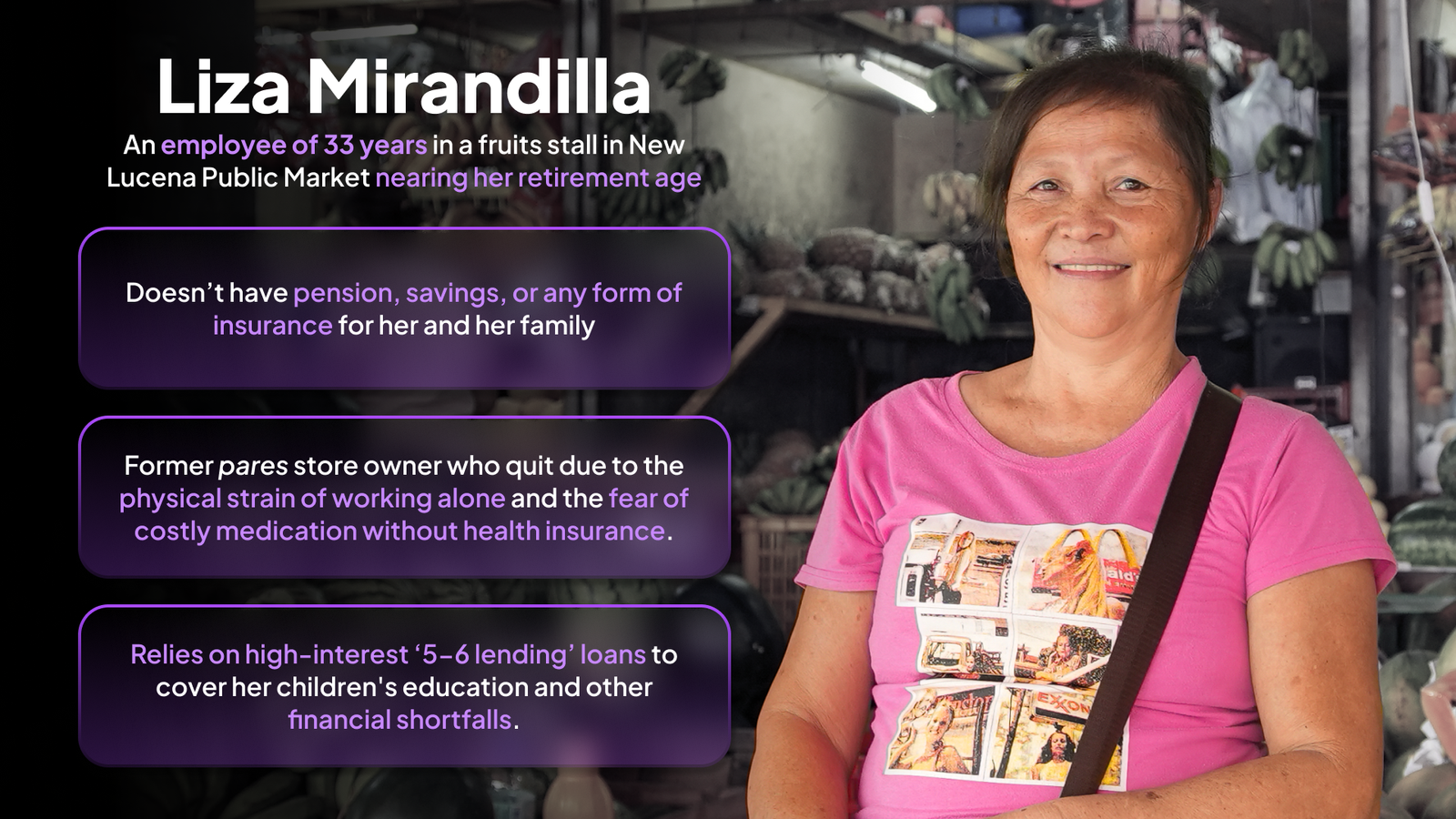
Liza Mirandilla, a 33-year veteran in the informal economy, exemplifies these challenges. As an employee in New Lucena City’s public market, Liza is nearing retirement with no pension, insurance, or retirement plan. Her family depends on “five-six” loans to fund daily expenses and the education of her six children. Despite running a profitable “pares” shop, health issues forced her to give up her business.
%
Filipino Senior Citizen have no mandatory pension coverage.
%
Filipinos have any form of personal savings
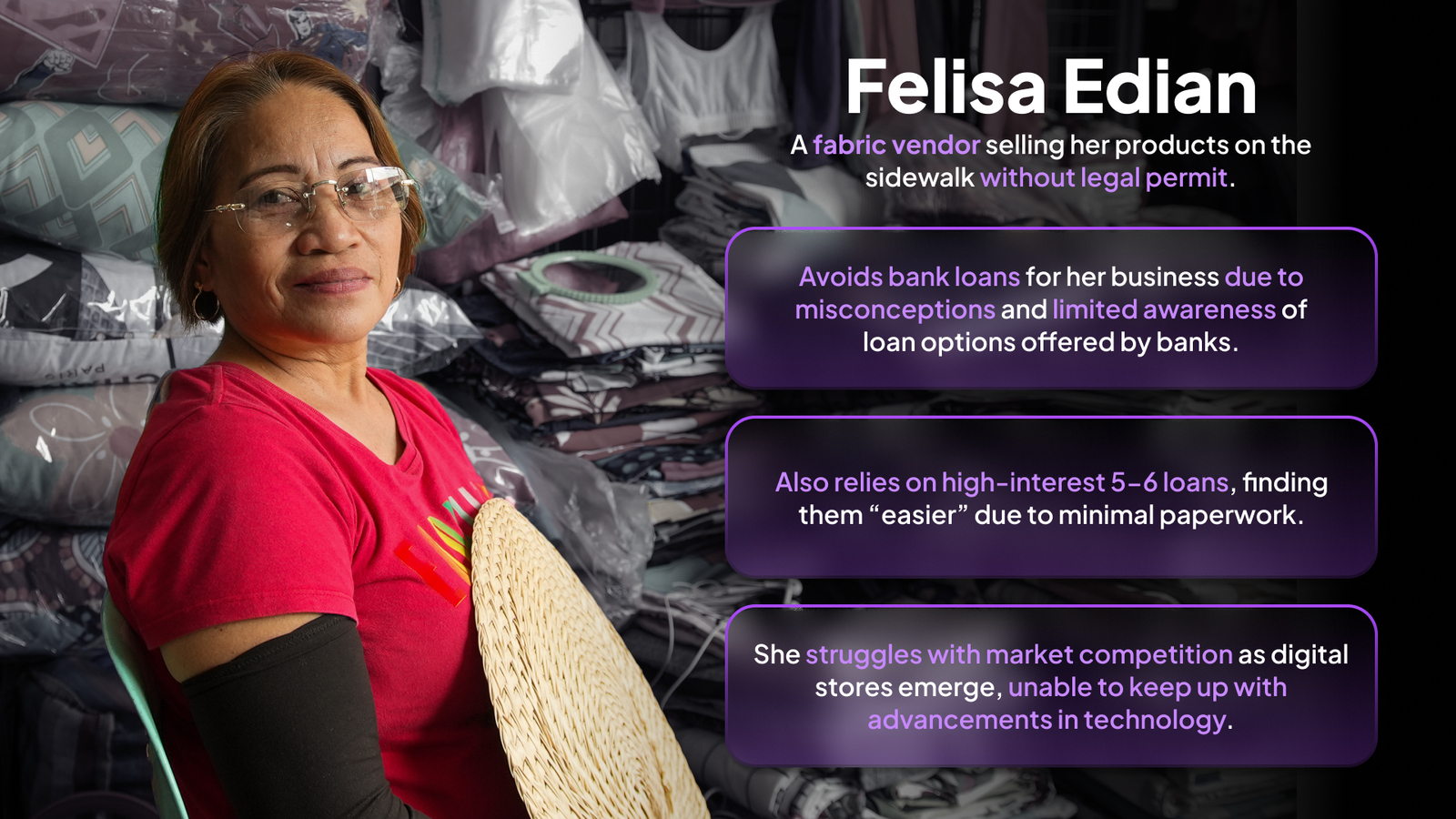
Felisa Edian, a door rug vendor, struggles to find a legal stall due to high rental fees and fears of collateral when accessing formal loans. With no stable income and constant risk of fines and eviction, she relies on informal lending to sustain her livelihood.
%
Filipino population is unbanked
%
Filipino loans are from banks
Liza and Felisa’s story
Liza and Felisa’s stories underscore the importance of expanding access to formal credit systems and financial literacy. Products like BPI’s Ka-Negosyo Loan can provide affordable and flexible funding options for small business owners, allowing them to grow sustainably and reduce their reliance on informal lending. These loans offer terms that can support business operations, rental costs for legal spaces, and capital expansion.
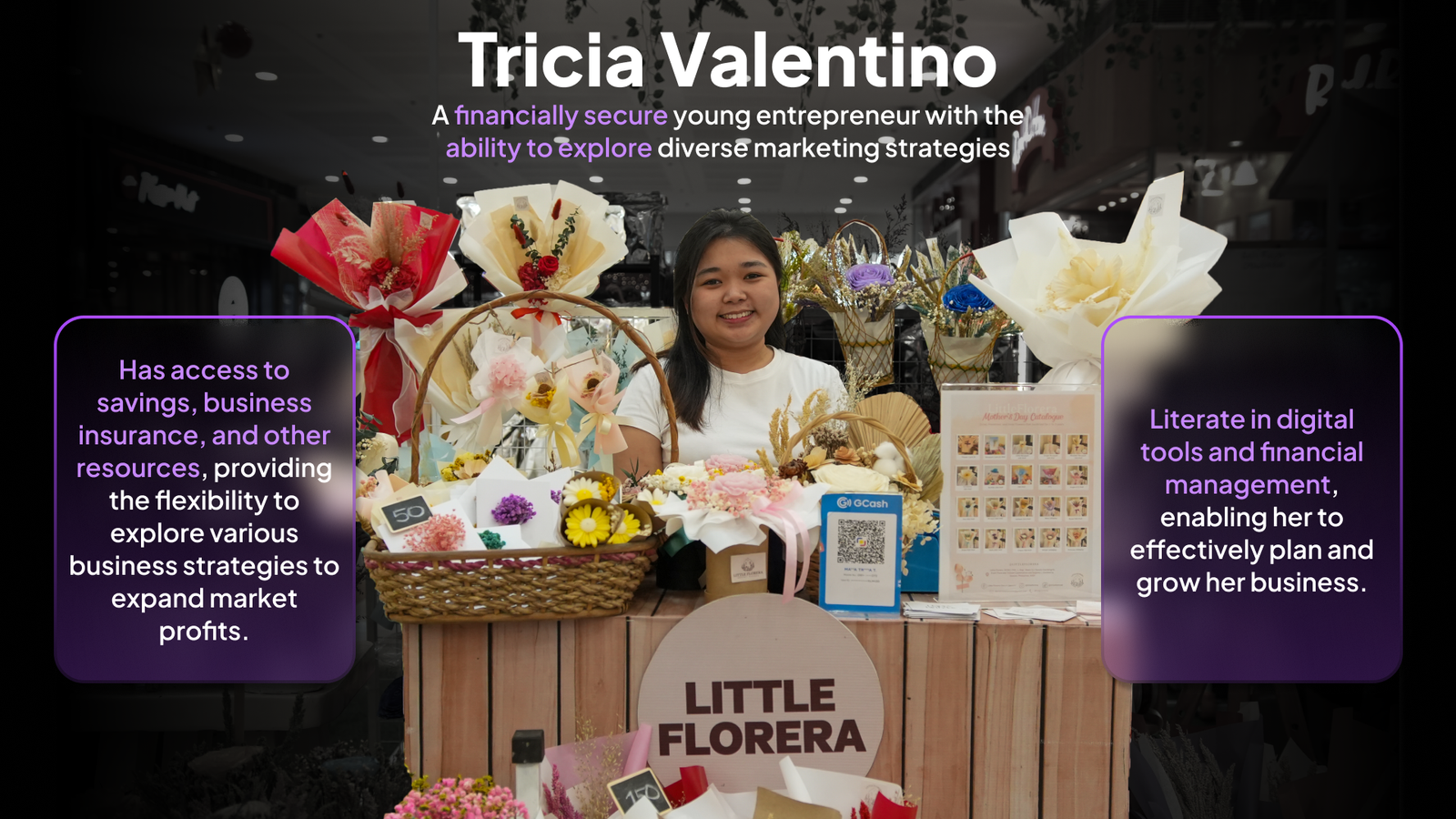
Tricia Valentino, a young entrepreneur with a dried flower business, represents the potential of financial security and literacy. With access to savings, business insurance, and formal loans, she was able to experiment with both online and physical retail spaces, growing her business sustainably. Tricia’s ability to take calculated risks, such as testing out high-traffic mall locations, was made possible by the financial safety net she had in place.

%
Registered Businesses are MSMEs
%
MSMEs employ 60% of our workforce
%
MSME owners are women
Helping MSMEs Grow with Technology
Financial inclusion is critical for the sustainable growth of MSMEs in the Philippines. By expanding access to formal loans, providing financial education, and fostering digital transformation, we can help small business owners like Liza, Felisa, and Tricia achieve stability, reduce dependence on informal lending, and grow their businesses confidently. It’s time to invest in an inclusive financial ecosystem that empowers entrepreneurs, ensuring a secure and prosperous future for all.